Showing posts with label fun fact. Show all posts

Thursday, September 1, 2011

Fun Fact: My Favorite Way to Eat Berries

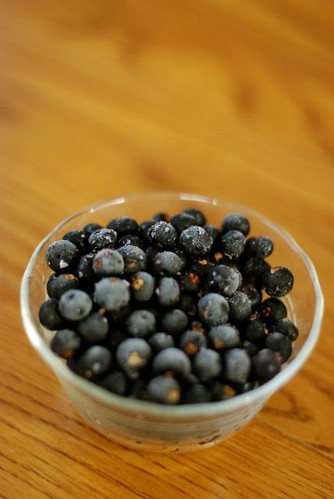
Alaska's Bounty

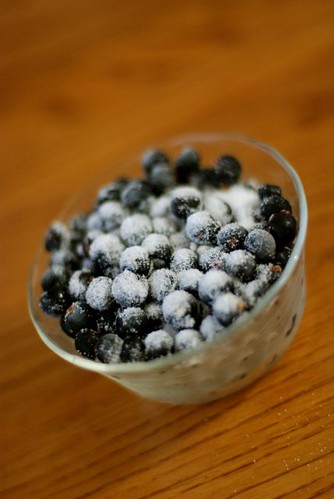
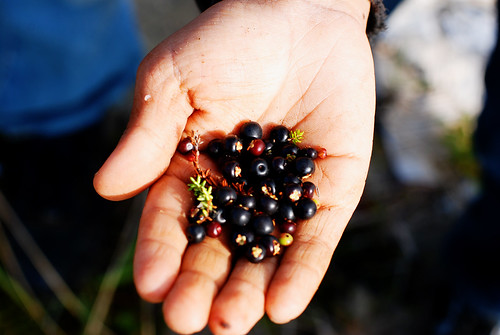
I was going to tell you that these berries were Alaskan blueberries, but then I did an internet search to make sure. It turns out I've been misidentifying these berries for almost seven years. According to this and this they are blackberries or crowberries.

At any rate, the above picture is of Alaskan berries. They grow near Shishmaref and Brevig Mission.


DSC_0038

Frozen berries are best served in a little glass bowl...


DSC_0040

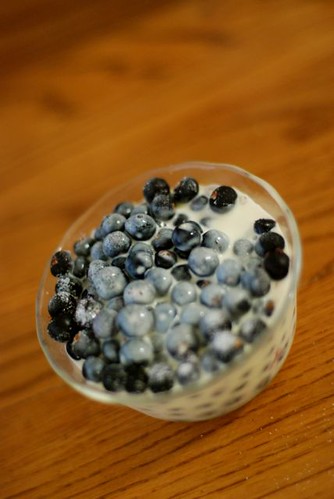
sprinkled with sugar...


DSC_0041

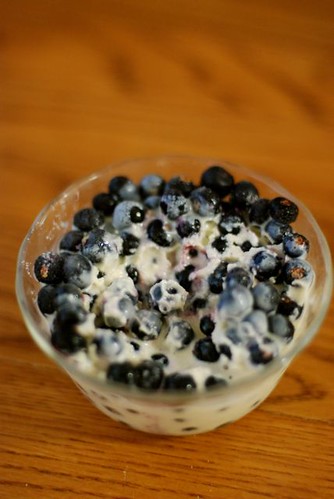
and covered with evaporated milk (my friend Ginger uses half and half, but I don't keep that around the house).


DSC_0042

The milk crystallizes around the frozen berries, and the sugar makes it just sweet enough.

Mmmmmmmm. The bounty of Alaska.


Monday, May 11, 2009

Fun Fact: Ice Fishing Hooks

Ice Fishing

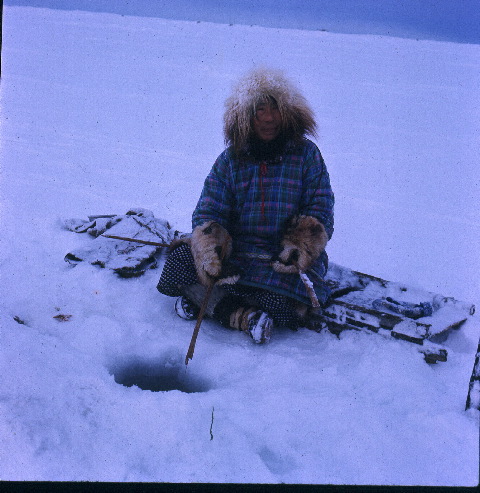
Ice fishing is a popular past time and subsistence activity in Shishmaref during the winter.

Note to readers: I've never actually gone ice fishing in Shishmaref. I've only, so this post might lack the usual VFN expertise. My apologies.

Other note to readers: This picture was taken decades ago in Shishmaref. I got it from our librarian Bill Nayokpuk.

You will notice that the "fishing rod" is a small piece of wood. That piece of wood is usually referred to as an ice fishing hook, even though a hook is only a small part of the apparatus.


DSC_0284

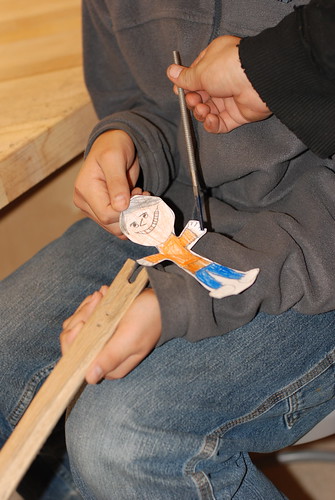
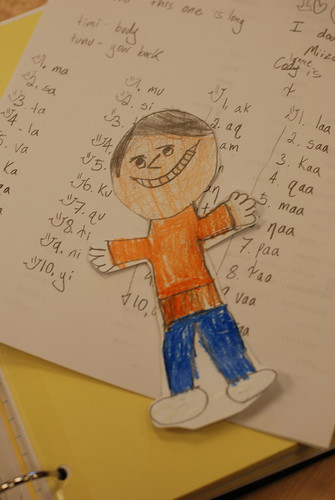
My kiddos got to make ice fishing hooks during Inupiaq Days, and Flat Stanley joined in on the fun. They started by using a file to make an indentation down the length of the wood. FS did a great job filing, even though the file was as tall as him.


DSC_0288


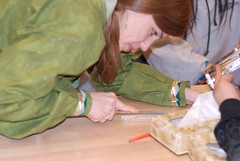
I got to give the filing a shot too. My kids totally cracked up. Let's just say it's harder than it looks. Hence the look of extreme concentration.


DSC_0276

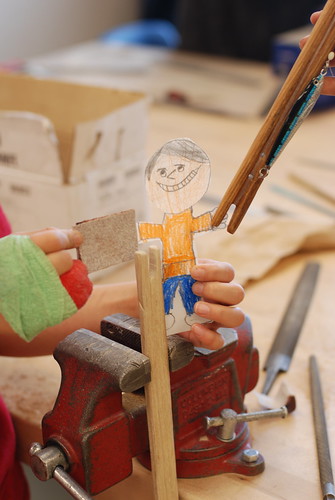
The next step is to sand the wood so that it's nice and smooth. FS got to master the use of sandpaper and, uh, the clampy things.


DSC_0297

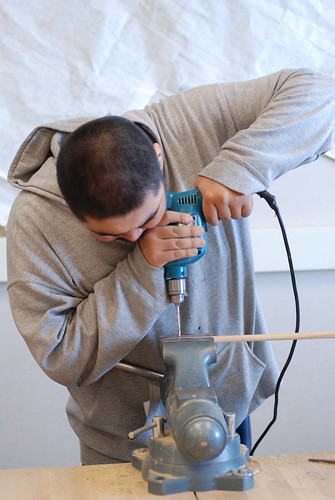
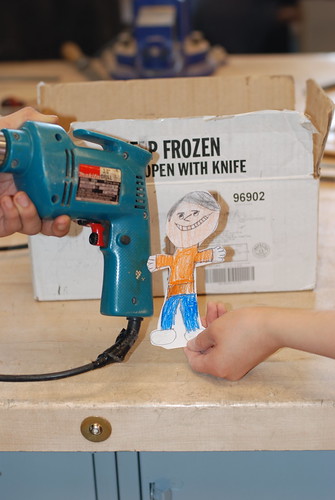
Once the wood is smooth, you have to drill a hole to tie the fishing line through.


DSC_0277

My high school boys made sure FS was instructed on proper use of the drill. Power tools can be fun!

FS wasn't able to take his finished hook fishing, but he can rest assured that his efforts helped secure a yummy dinner for somebody.

Note to readers: one more Flat Stanley post coming up (in time for the due date). Stay tuned!

Friday, May 1, 2009

Fun Fact: The Inupiaq Alphabet

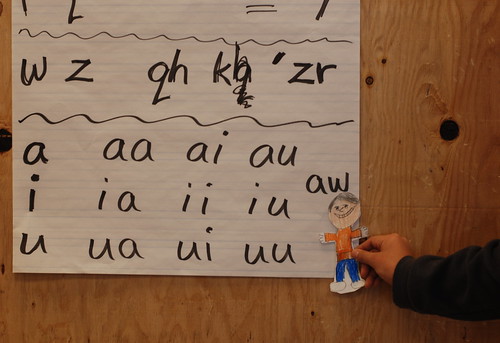
DSC_0231

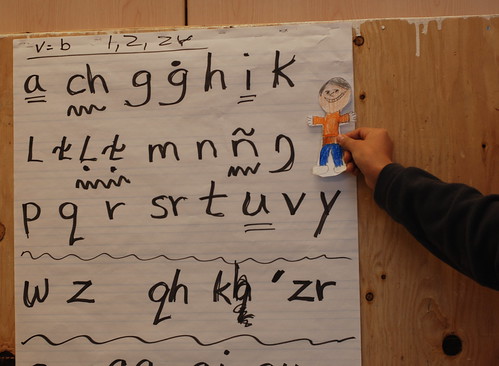
In the early seventies, linguists from the University of Alaska Fairbanks partnered with local experts to create a standardized written version of the Inupiaq language. Shishmaref is extremely lucky to have one of the local experts in our village. John Sinnok was instrumental in creating the written version of Inupiaq and preserving our local dialect. He taught a basic Inupiaq Writing class during Inupiaq Days, and Flat Stanley and I attended.

The Inupiaq Alphabet has 23 letters. Some you probably recognize. Some you probably don't. (Wow, that was profound. Get ready for the Pulitzer nomination...)


Picture 1

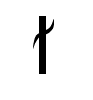
This is the "belted l." You begin pronouncing it like you would a regular English "l," but then you make a sound kind of like you're clearing your throat.

(Note to readers: Stay with me. The descriptions will get better from here on out. I promise.)

Picture 2

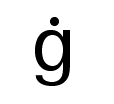
This is the dotted g. It's pronounced kind of like the belted l. You begin pronouncing it like an English g and end with a sound like you're clearing your throat.

(Note to readers: Just kidding about the improved descriptions thing...)


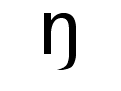
Picture 3

This is the "n" with a tail. It is pronounced like the "ng" in "song."

Fun facts about Inupiaq consonants:

-you will never have three consonants together in an Inupiaq word

-the letter "v" makes a "b" sound if it precedes the letters "l" or "z"

-zr together sounds like "sh"

-the Shishmaref dialect of Inupiaq has five consonants that are not used in other Inupiaq dialects

-four of the consonants in the other dialects are not used in the Shishmaref dialect (they are represented in the top picture with a squiggly line underneath them)


DSC_0232

Inupiaq only has three vowels: a, i, and u, but they can be combined in nine different ways, each with its own pronunciation.

a = uh
aa= aahhh (like a doctor is checking your throat)
ai= long a (like ape, ate, or angelic)
au = oh (like oat, only, or ode)

i= short i (like is, if, or iridescent)
ia= ee-uh
ii= eeeeeeeeeeeee (like something started you)
iu= eee-oo

u= oo (said in a short syllable, like you're shouting "Boo!" at someone (you wouldn't say, "Booooooooooooooo!"))
ua = oo-uh
ui= oo-ee
uu= ooooooooo (like booing a bad ref at a basketball game, "Boooooooooooooooooooooooo!")


DSC_0234

After learning the basic phonics of Inupiaq, John gave us a series of quizzes. He would say words or letter combinations, and we had to write them down, spelling them according to Inupiaq phonics. Flat Stanley and I did AWESOME on the quizzes until John got to the six- and seven-letter words. Then we started tanking it.

I guess we need a little more practice. Maybe we should check out the following sites:

Alaskool's Inupiaq Text Dictionary

BSSD Inupiaq Dictionary With Pictures and Sound Recordings

Tuesday, March 17, 2009

Fun Fact: Christmas Races

I know it's been about three months since Christmas. But, all of the recent snow makes it seem like we're still in the middle of winter, so I only feel moderately embarrassed about writing a post about a Shishmaref Christmas tradition...


DSC_0615


The week in between Christmas and New Year's is full of Christmas games. One of the games is foot races. This is me and one of my students before the races.


DSC_0618


Everybody races against people in their age group. My age group consisted of women ages 25-29. The race marshall is writing down our names on the official clipboard.


DSC_0621


Getting ready to start. You will notice I had my game face on. I take these things very seriously.


DSC_0627


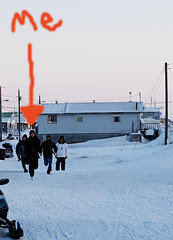
Our race was about 100 meters long. It consisted of running down "main street" and around a man that was our place marker. You will notice that we all began the race in a pretty close pack.


DSC_0628


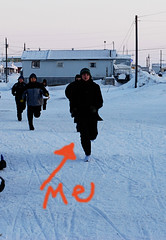
During the home stretch I pulled away from the pack.


DSC_0629


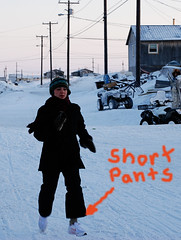
Toward the end of the race, I was clearly in the lead. I was also clearly wearing snow pants that were too short for me.

(Note to readers: I don't typically wear pink Nikes with my winter apparel. Big boots are just hard to run in. Thank you.)


DSC_0761


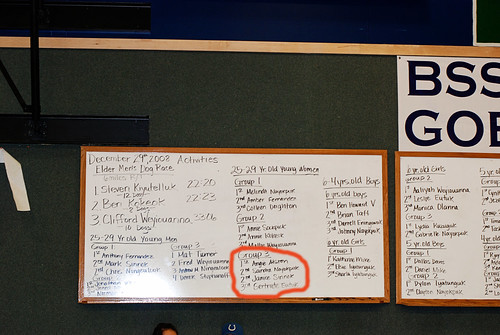
The award ceremony for my race was later that night. There was a big board with the rankings for all of the day's races. For your viewing convenience I circled my race results with my red spray paint tool in Photoshop.


DSC_0813


They call of the racers up individually, and their honeys pin a ribbon on them. Steve pinned my ribbon on. There's no picture of that because he was also acting as my personal photographer and couldn't fill both responsibilities simultaneously.

(Note to readers: the top I'm wearing is a traditional eskimo shirt called a kuspuk. Many people in Shishmaref wear them on special occasions. Racing awards are definitely considered a special occasion.)


DSC_0821


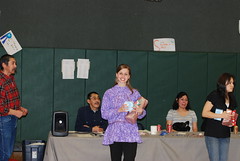
The IRA (tribal council) gave each racer a check. First place got $30, second place $25, and third place $20. I am examining my sa-weet $30 check. Hey Shishmaref IRA! Thanks for the moolah! I used mine to go on a Joann.com shopping spree!


DSC_0825(1)


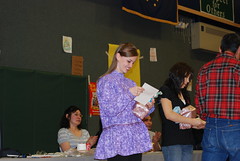
This is where things get really fun. After the checks are presented, a member of the IRA council gives each racer a bag pull of presents and leads the crowd in a hip-hip-hooray for all of the racers. That promotes all kind of warm fuzzies. Then, community members come up and put presents in your bag!!!!


DSC_0919(1)


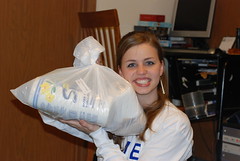
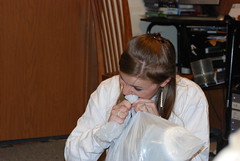
I was totally jazzed to check out the presents in my bag, but I had the decency to wait until after the award ceremony. This is me with my bag of presents from the IRA.


DSC_0921(1)


The bag was tied securely with a knot. Hey IRA, thanks keeping my presents safely sealed in the bag!


DSC_0923(1)


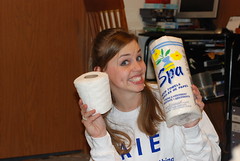
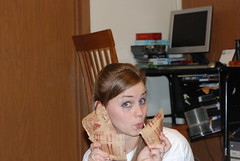
These are pretty typical items in the IRA gift bag. Both are very nice to have. I am often too cheap to buy paper towels on my own.

(Note to readers: I always buy toilet paper. No matter what the cost.)


DSC_0925(1)


This year's IRA bag also sported instant oatmeal. Sweet!


DSC_0928(1)


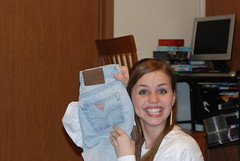
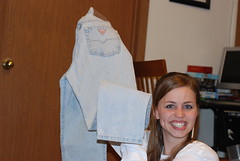
IRA gift bags always contain at least one item of clothing. I'm not sure where the clothing comes from, but this year I totally scored vintage Guess jeans.


DSC_0929(1)


These are the original authentic stovepipe-leg light-colored straight from the eighties Guess jeans. I'm thinking of selling them on E-bay for $300.

(Note to readers: I would love to rock these jeans with a side ponytail and a hot pink sweater with beads on it, but they're size negative fourteen and a half. I won't be wearing them any time soon, barring any unfortunate incidents with accidental liposuction or parasites.)


DSC_0932(1)


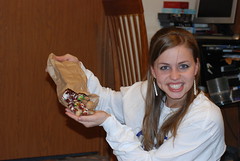
There was also the obligatory bag of ribbon candy and nuts. I chipped a tooth trying to crack open racing nuts one year. (Hey Dad! I know using my teeth for things is bad! I'm sorry!)


DSC_0957(1)


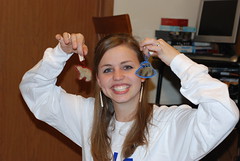
Once the IRA bag was emptied I moved on to the other goodies people had put in my bag. One of my students made these ornaments out of seal skin.


DSC_0954(1)


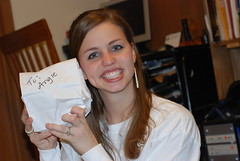
Some of my presents had my name on them. That made me happy. It was like they were meant for me and not just randomly placed in my bag (not that I mind random presents...).


DSC_0970(1)


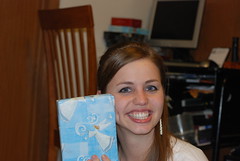
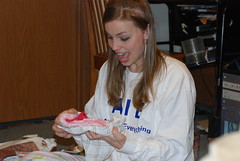
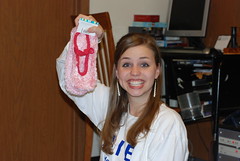
This is me opening a pair of fuzzy pink socks. You can tell by how wide my mouth is open that I was pretty excited about them.


DSC_0971(1)


The pink socks were a gift from one of my students. She said she bought them for me, "So you don't have to wear those stained ones any more." That's a direct quote. Nice to know people are watching out for me.


DSC_0982(1)


This is the gift Steve put in my bag. It was a book. He had given me on Christmas Day. That I had already unwrapped. It turns out, Steve forgot to save one of my presents to use as a racing gift. That's a huge relationship no-no in Shishmaref. Luckily, our marriage is strong enough to handle such incidents.


DSC_0983(1)


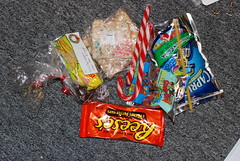
To spare all of my gentle readers from endless pictures of all of my gifts (and believe me, I have one of every single thing I was given), I decided to group the gifts into general categories for group shots. This is the "Edible Category."


DSC_0984(1)


"Personal Hygiene Category."


DSC_0985(1)


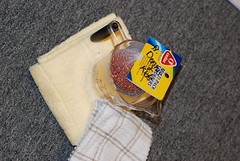
"Useful Kitchen Supplies Category."

I'd love to be able to post pictures of Steve's racing adventure, but he DIDN'T RACE. Not even the IRA check and bag of presents was enough to entice him.


New Pictures 105.jpg

He might have had a good reason. This is a picture of Steve after his race during Christmas Week 2005. A person should only have to go through that once in their life.
Saturday, October 18, 2008

Fun Fact: How to Butcher Spotted Seals

Today was one of the best days I've ever had in Shishmaref (and there have been some pretty good ones). Today I learned how to butcher a spotted seal. I didn't actually do any of the butchering, but I watched very carefully.


***WARNING: The following post contains seal guts. Lots of them.***


DSC_0272.JPG

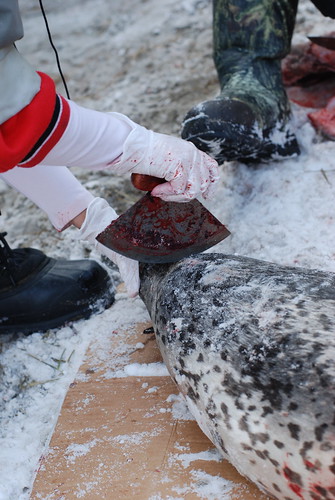
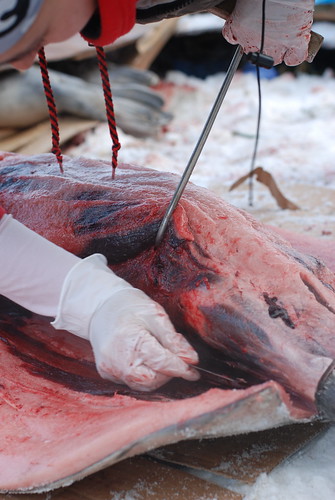
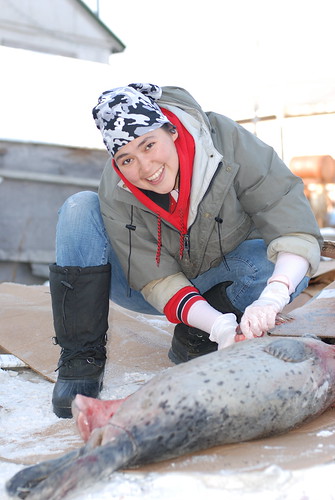
First, you make a cut through the skin all around the tail. The blade Aaka is using is called an ulu. You can tell by the condition of the blade that this wasn't the first butcher of the day...

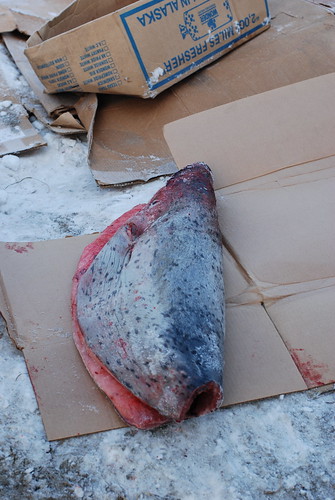
These seals are spotted seals. They are not used by the Inupiaq people as food, even though some places in Alaska eat the spotted seals. The people of Shishmaref only ate the spotted seals during starving times. Otherwise, the meat is used to feed dog teams. The skins, however, are beautiful and used in making mittens, hats, ornaments, and just about anything else.


DSC_0270.JPG

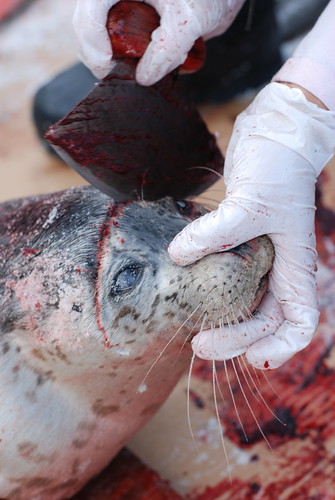
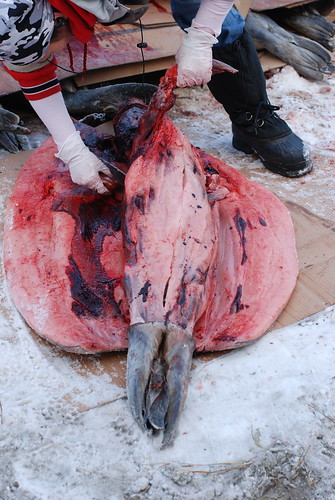
You make a similar cut around the head. I am aware how disturbing this picture is. Aaka noticed me staring sympathetically at the seal, and she said, "Real cute, huh?" Then she commented that it's easy to see how people are against eating meat when you see the butchering process up close. So much of our food is generally processed, so we never see its original state.

We then had an interesting discussion about the use of animals to sustain human life. Aaka said that the Eskimo way is to kill animals with as little suffering as possible. Good hunters will keep all of their tools in good condition to be able to end an animal's life quickly without much pain. Good hunters and their wives will even keep their knives sharp to be able to butcher the meat quickly and easily.
There's an Eskimo legend about a man who turned into a caribou. He lived with a herd, and they explained to him the difference between good and bad hunters. Bad hunters killed for pleasure and wasted meat. Good hunters killed for food and took care to waste no meat. The caribou always fled fromt the bad hunters, but they allowed to good hunters to catch a few of their herd. The caribou would comment among themselves about the state of the hunters' tools and their treatment of their prey.

The lesson of the story is that the best way to have success as a hunter is to treat the animals with respect, even after they've been slain.

That story made me feel better about taking the above picture. Hopefully it makes you feel better about looking at it.


DSC_0300.JPG

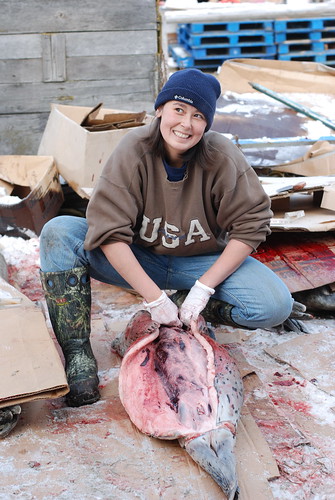
Of course, this story was told as Aaka continued to butcher her seal. She sliced the seal down the middle of the tummy.


DSC_0094.JPG

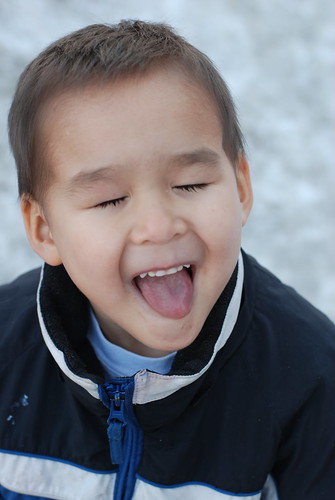
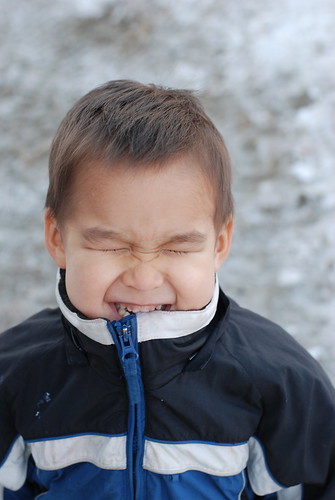
This little guy kept interrupting in order to get his picture taken.


DSC_0085.JPG

He insisted on equal screen time as the seal.


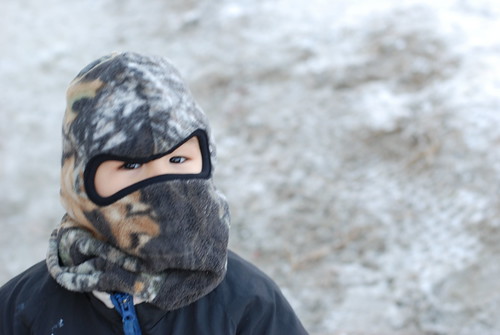
DSC_0100.JPG

But after modeling his ultra cool camo face mask he got cold and went inside.


DSC_0084.JPG

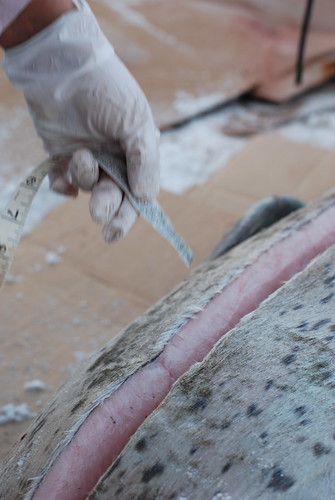
We were taking samples for the Fish and Game Department, so we measured the layer of blubber. Turns out, spotted seals have slightly less blubber than Alaskan teachers who have spent a lot of time on their couches during the last three and a half years...


DSC_0120.JPG

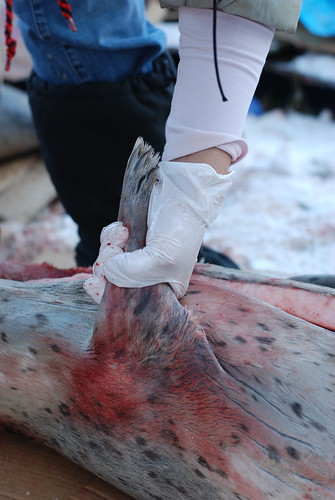
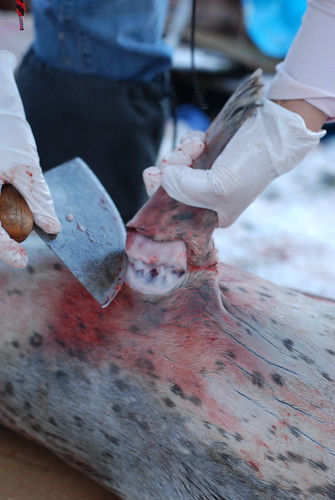
Then we felt for the joint in the flipper. You're supposed to cut right on the joint.


DSC_0123.JPG

Found it!!


DSC_0156.JPG

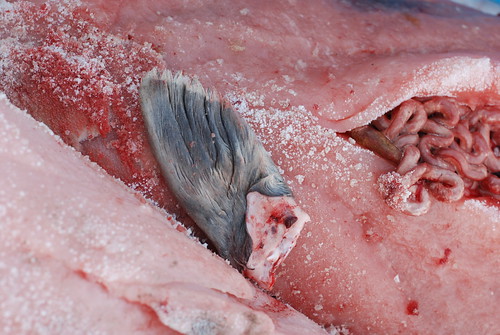
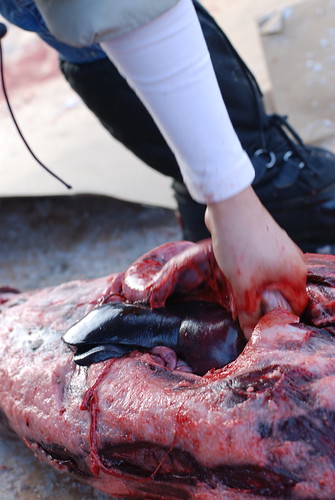
Once the flipper is cut off, it's discarded. This flipper happened to land on a previously butchered seal, close to the intestines. I'm kind of amazed that I can take pictures of this without vomiting.


DSC_0093.JPG

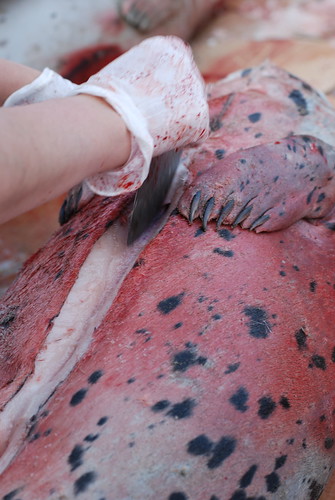
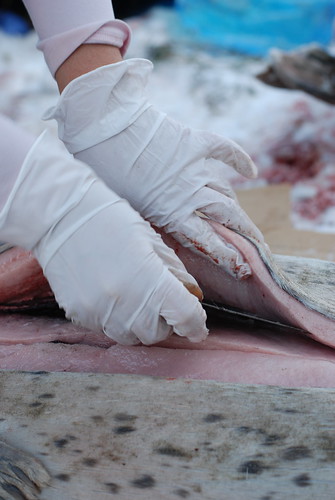
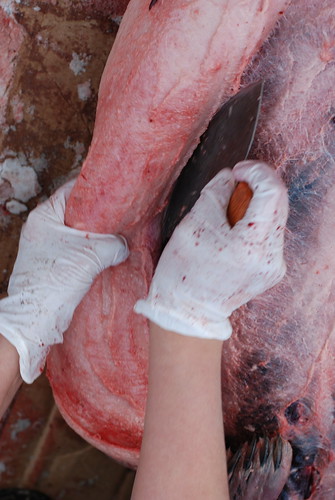
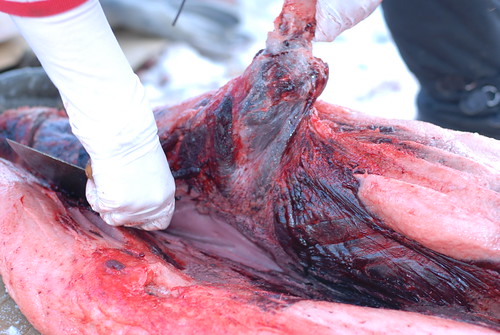
Then you use your ulu to cut between the blubber and the dark meat.


DSC_0321.JPG

If you're doing it right, you will be able to easily slide the ulu underneath the blubber along the contour of the body.


DSC_0226.JPG

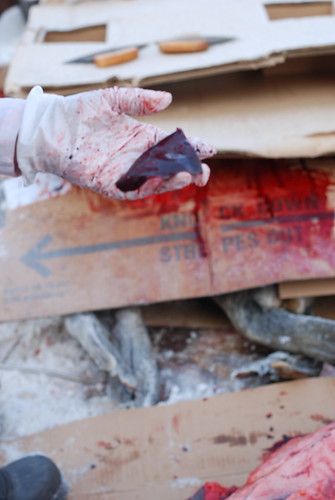
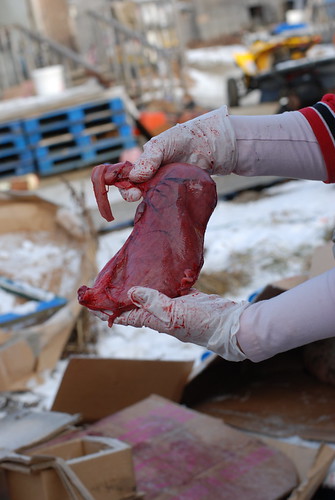
We had to take a sample of the liver and the kidney. I can't remember which this was.


DSC_0248.JPG

This one I know. This is the stomach. We also needed it for our samples.


DSC_0357.JPG

Anybody know what this vital organ is? Yeah, neither do I. I just know it was in the way when we were trying to get to the stomach.


DSC_0166.JPG

Inupiaq girls used to learn how to butcher seals when they were about ten. Nowadays school takes up a lot of the time that would otherwise be used learning how to butcher. Most women now learn after they're finished with high school.


DSC_0184.JPG

Sometimes it's easier to hold the seal with a metal hook while you cut. I got to hold the hook for one seal. I felt very helpful.


DSC_0198.JPG

This little guy is almost done. You can see that his skin has been almost completely pulled away from his body.


DSC_0340.JPG

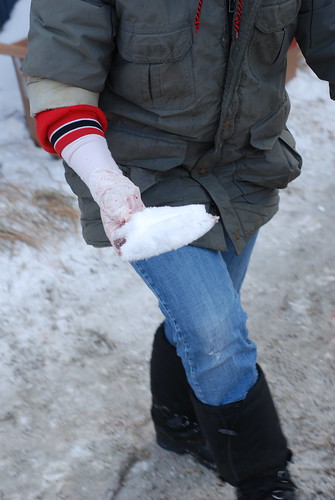
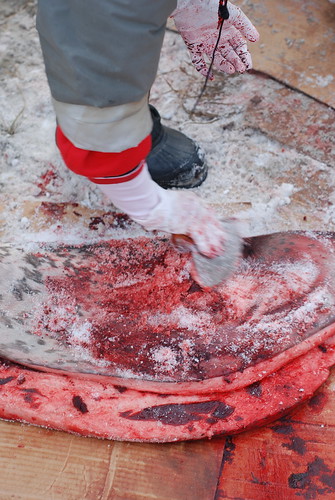
If your skin ends up being really messy, you need to carry over some snow...


DSC_0343.JPG

And use it to clean up.


DSC_0228.JPG

Then the skin gets folded over and put in a pile.


DSC_0132.JPG

VFN would like to thank the amazing Aaka...


DSC_0314.JPG

and her lovely sister Kate for modeling the correct procedure for spotted seal butchering. Stay tuned for our next installment when you learn how to qapsraq (and, possibly, what qapsraq means).